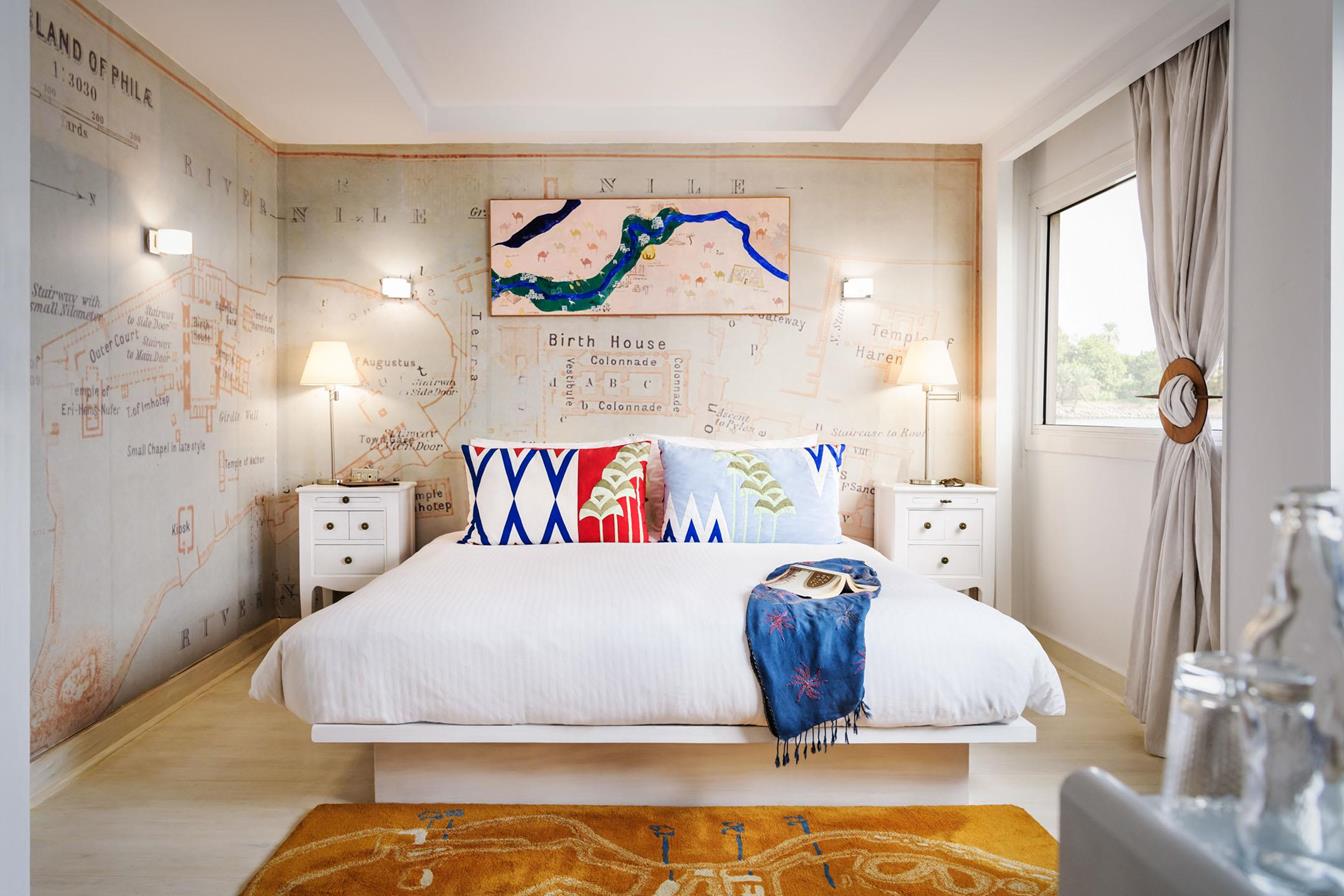
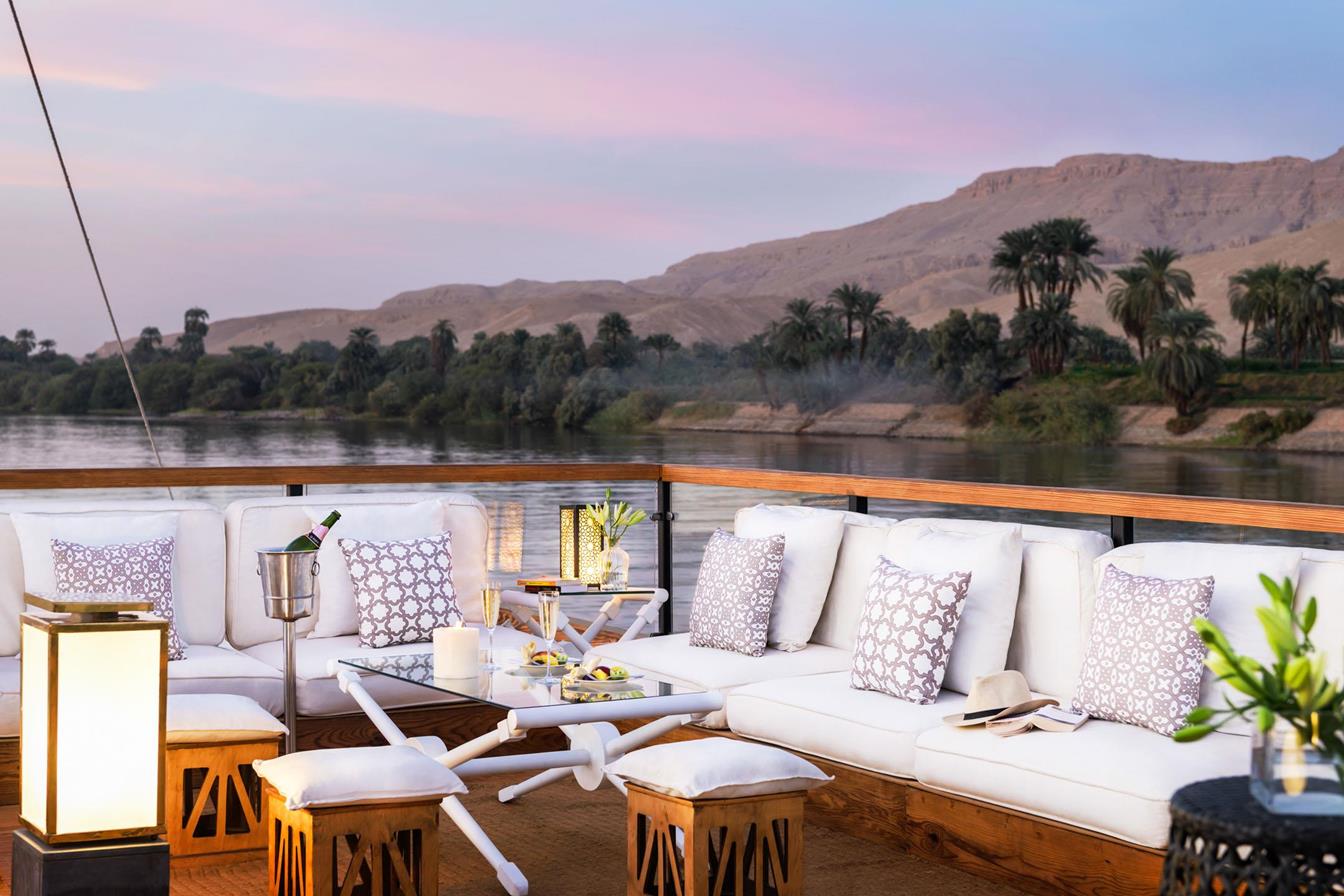
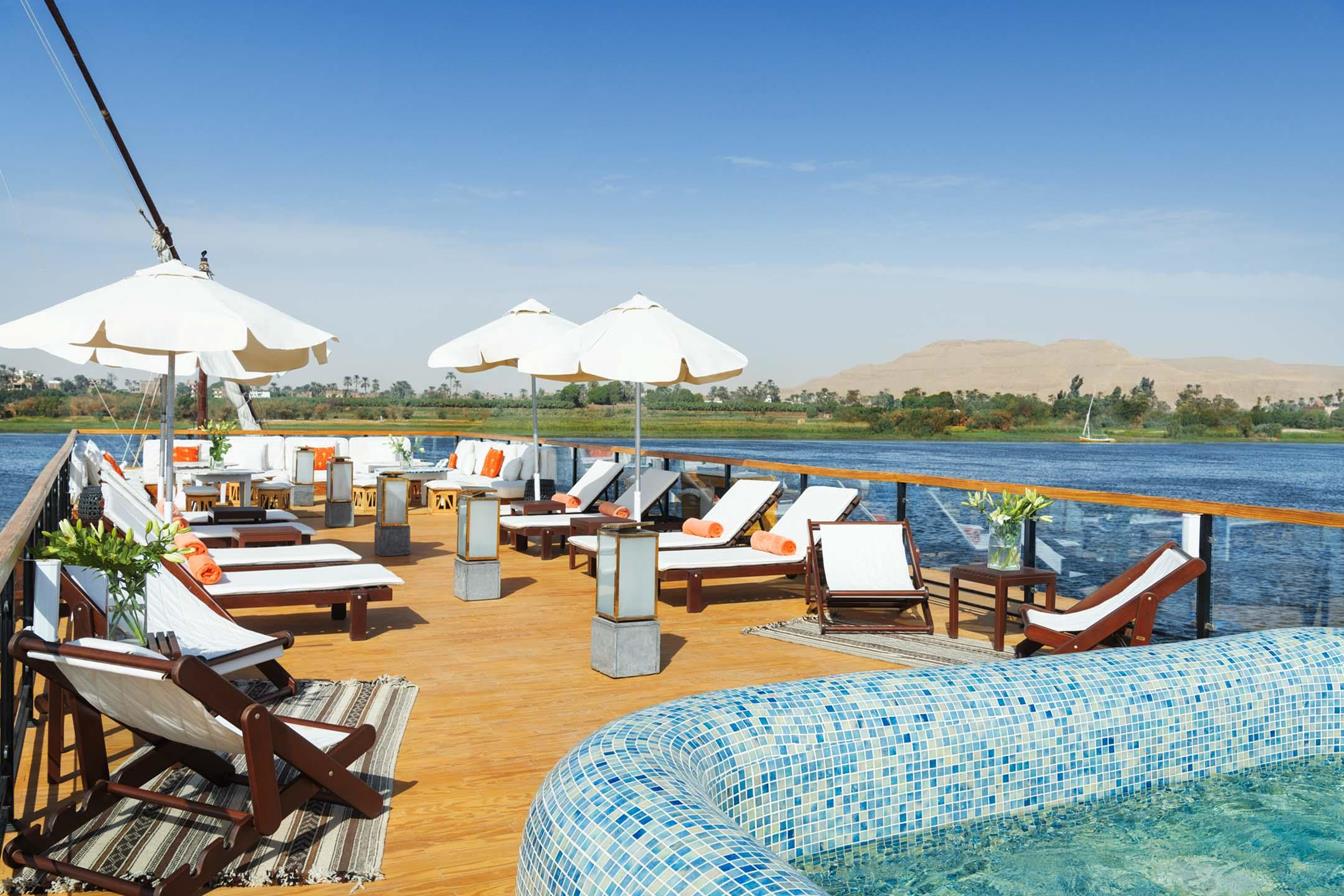
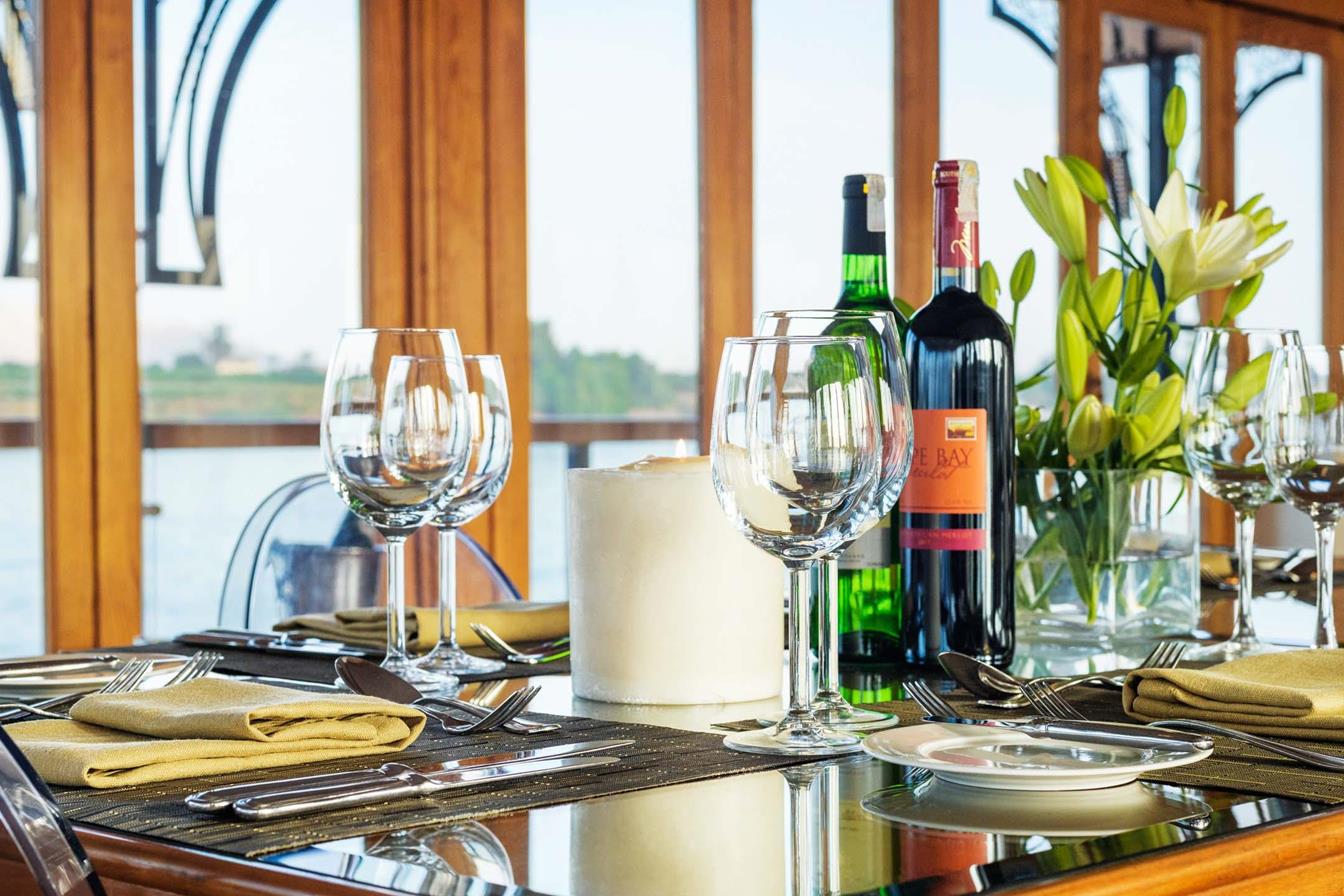
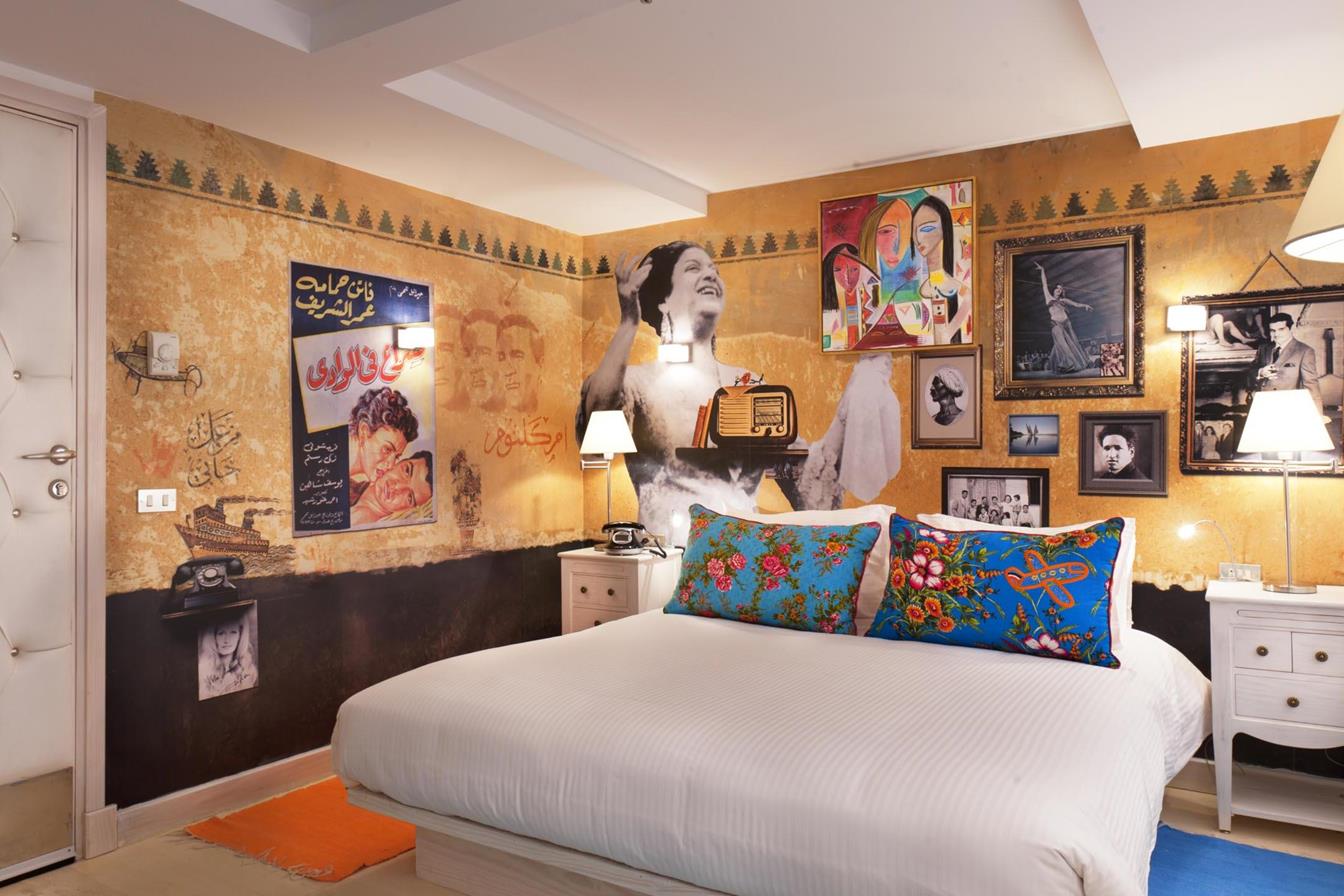
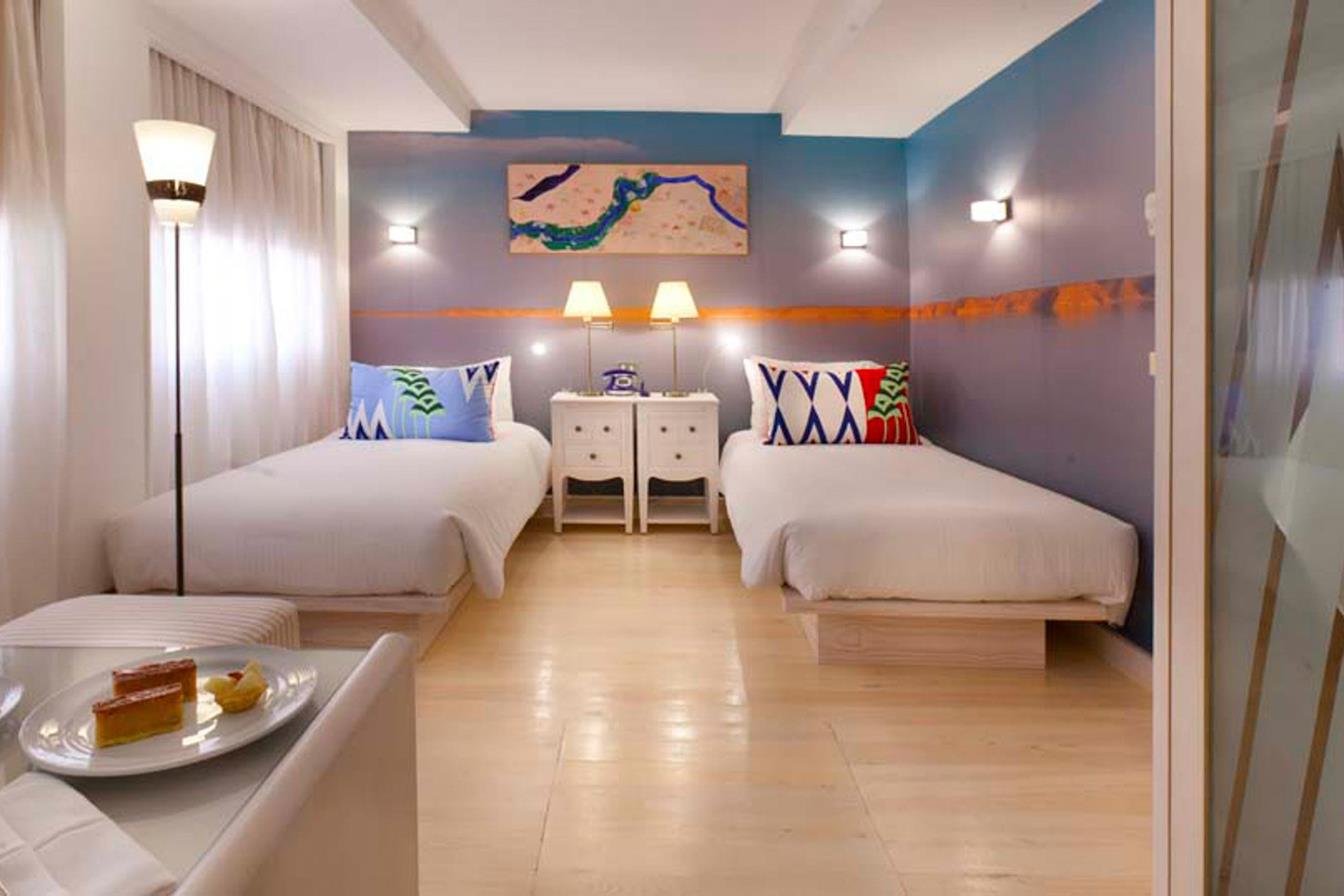
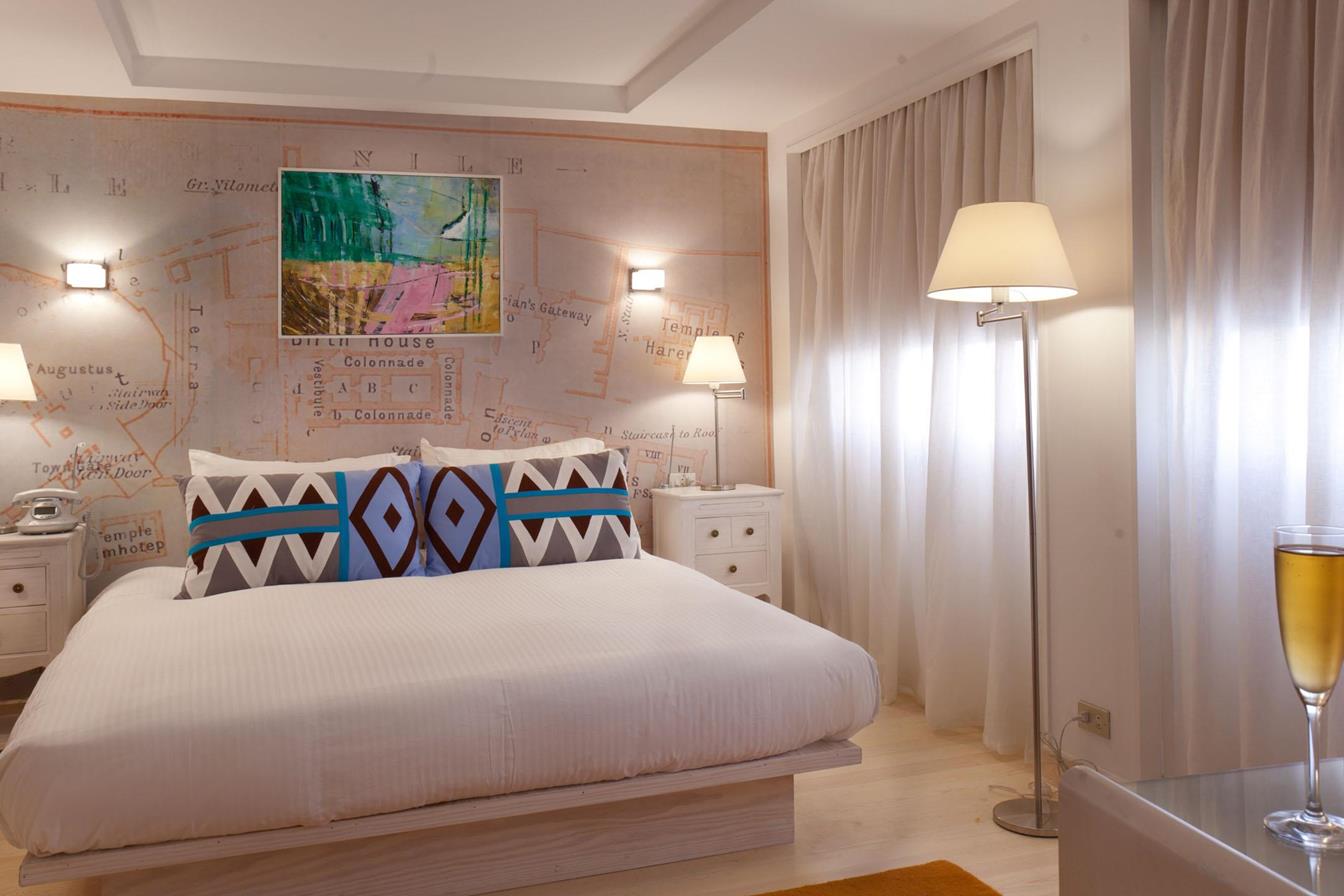
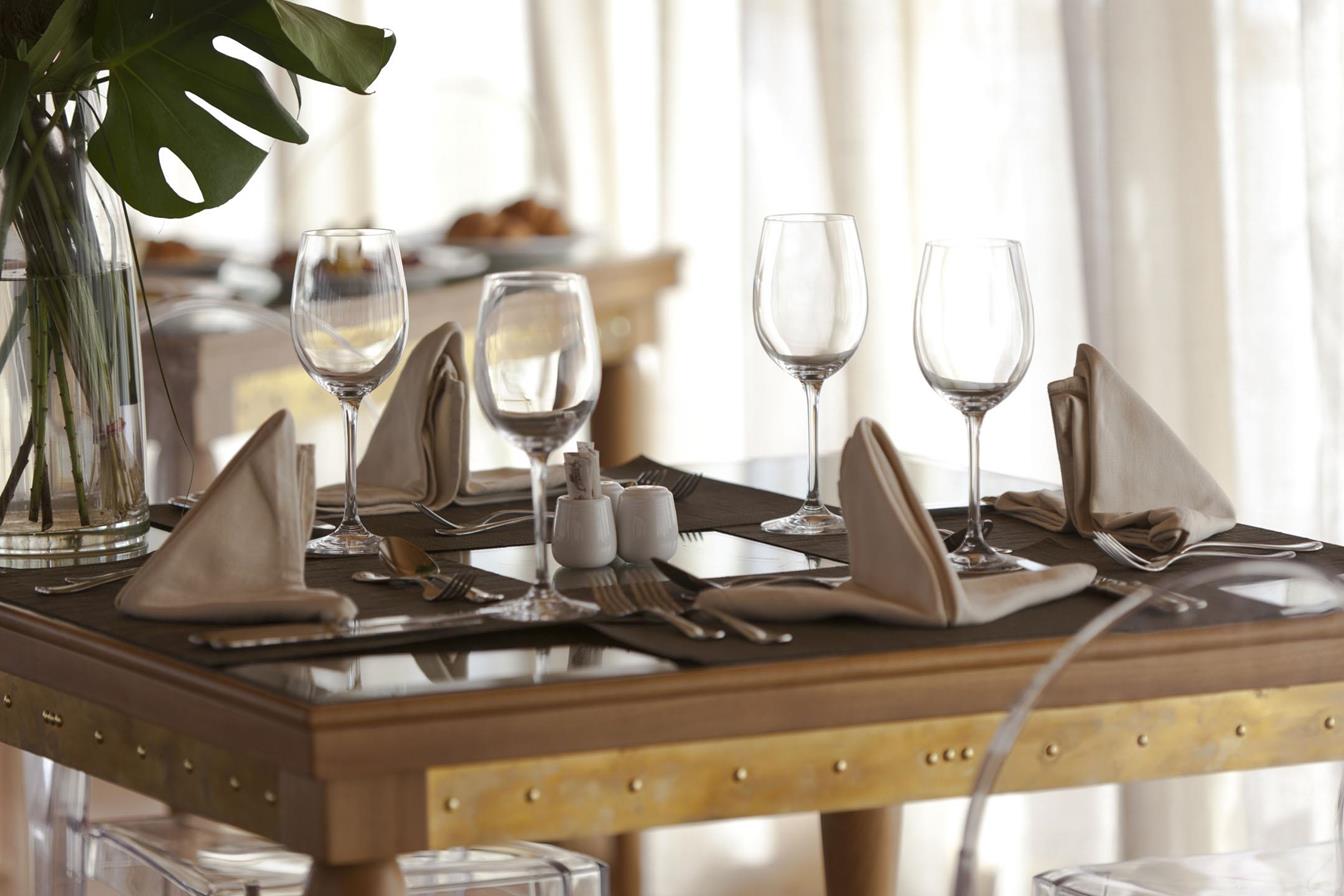
The Sanctuary Zein Nile Chateau is surrounded by sliding glass doors that can be opened so guests can enjoy an indoor/outdoor lounge experience in the Nile. Its design and atmosphere bring to mind elegant times gone by when Egypt was where the rich and famous players were. Never before has it been so fun to sail down the Nile. The Sanctuary Zein Nile Chateau is the first custom-made dahabiya (a traditional sailing boat) on the Nile. With lots of open space, the Zein has a beautiful upper deck, a sun deck with an Arabian theme, and a luxurious dining area. The itinerary for your Egypt cruise on the Sanctuary Zein Nile Chateau is an “a la carte” menu, which gives you a unique chance to choose how you want to see the sights. From the comfort of the dahabiya, you can take in the beauty of the views around you, which haven’t changed in hundreds of years. This is how it was meant to be to sail on the Nile.
You can take in the beauty of the scenery from the comfort of the dahabiya, which hasn’t changed in hundreds of years, as you sip a delicate cocktail. Memories from any of the six beautiful cabins on the six-cabin bespoke boat can be written down. This is how it was meant to be to sail on the Nile.
Check-in on board the Sanctuary Zein Nile Chateau, followed by lunch.
A choice of two of the below:
1. Philae Temple
According to the Ancient Egyptians, the goddess Isis traveled all over Egypt gathering her husband Osiris’s remains after he was cut to pieces by his evil brother. On Philae Island, where she found his heart, the Egyptians built a sacred temple to Isis, goddess of purity, sexuality, nature, and protection. While building the High Dam, Philae Island was submerged by water, so UNESCO helped transport the temple complex to nearby Agilika Island, where you see it today.
2. Unfinished Obelisk
Visit this massive obelisk, abandoned in Aswan’s Northern Quarry, when a crack was found as it was carved from the red granite. Tools left behind to show how builders accomplished such great work.
3. Kalabsha Temple
The Temple of Kalabsha (also Temple of Mandulis) is an Ancient Egyptian temple located initially at Bab al-Kalabsha (Gate of Kalabsha), approximately 50 kilometers south of Aswan. The temple was situated on the west bank of the Nile River in Nubia and was initially built around 30 BC during the early Roman era. Afternoon tea and dinner on board. Overnight in Aswan.
Meals: Lunch & Dinner
Night Stay on Dahabiya Bout
Breakfast on board with the morning and afternoon at leisure.
Lunch will be served on board.
Visit the Spice market, followed by a visit to Nubian Museum. Called “The Land of Gold” by the ancient Egyptians, Nubia extended from Aswan in the north to Sudan in the south and had its own distinct culture and language.
Much of Nubia was covered with water when the Aswan High Dam was built, but efforts were made to save and preserve Nubian culture. This vast collection of Nubian artifacts is housed in a beautiful sandstone building. Afternoon tea and dinner on board. Overnight in Aswan.
Meals: Breakfast, Lunch & Dinner
Night Stay on Dahabiya Bout
Breakfast while sailing to Kom Ombo. Morning visit to Kom Ombo Temple In this Ptolemaic temple shared by two gods, Sobek and Horus, the Elder, everything is duplicated symmetrically, with double hallways, doors, and chambers.
Lunch on board while sailing to Selsela.
Afternoon visit to Selsela Tombs Selsela (Jebel Selsela) The ancient Egyptian site of Selsela is about 26 miles south of Edfu and 14 miles north of Kom Ombo and is located in an area where the Nile River narrows.
It was known in ancient times as Khenu (Place of Rowing), and here, the bedrock changes from limestone to sandstone. This is the border of the Egyptian region of Nubia, and in ancient times, Egyptians believed that the Nile originated here. Afternoon tea and dinner on board. Overnight by a nearby island.
Meals: Breakfast, Lunch & Dinner
Night Stay on Dahabiya Bout
Breakfast on board while sailing to Edfu. Morning visit to Edfu temple
Explore the largest and most completely preserved Pharaonic – albeit Greek-built – temple in Egypt, the extraordinary Temple of Horus at Edfu.
Lunch while sailing to El Kab. Afternoon visit to El Kab
El Kab is an Upper Egyptian site on the east bank of the Nile at the mouth of Wadi Hillal, about 80km south of Luxor, consisting of prehistoric and Pharaonic settlements, rock-cut tombs of the early 18th Dynasty (1550-1295 BC), remains of temples dating from the Early Dynastic period (3100-2686 BC) to the Ptolemaic period (332-30 BC), as well as part of the walls of a Coptic monastery. Afternoon tea and dinner on board. Sailing to Esna. Overnight in Esna.
Meals: Breakfast, Lunch & Dinner
Night Stay on Dahabiya Boat
Breakfast on board. Morning visit to Esna Temple
Visit the Greco-Roman Temple of Khnum at Esna. The beautifully preserved Great Hypostyle Hall was built during the reign of the Roman Emperor Claudius; it was excavated from the silt that had accumulated through centuries of annual Nile floods and is about nine meters below present-day street level.
Lunch on board.
Afternoon tea on board while sailing to Luxor. Dinner on board. Overnight in Luxor
Meals: Breakfast, Lunch & Dinner
Night Stay on Dahabiya Bout
Breakfast on board with the morning at leisure. Lunch on board.
Afternoon visit to the East Bank, with a choice of three of the below:
1. Karnak Temple
Visit the Temple of Karnak, built over more than a thousand years by generations of Pharaohs. The remarkable Hypostyle Hall is an incredible forest of giant pillars, covering an area larger than the whole of Notre Dame Cathedral.
2. Luxor Temple
Visit the strikingly graceful Temple of Luxor dedicated to the god Amun. Proceed to the Temple of Luxor, once connected to Karnak via the Avenue of Sphinxes, almost 3 kilometers in length. Built by Amenhotep III in 1380 BC, later pharaohs added to the site. The temple enjoyed many celebrations, the most important being the Festival of Opet which lasted almost a month.
3. Luxor Museum
Visit the surprisingly entertaining Luxor museum. The Brooklyn Museum of New York created displays of pottery, jewelry, furniture, statues, and stelae. They include a carefully selected assortment of items from the Theban temples and necropolis. Several exhibits from Tutankhamun include a cow-goddess head from his tomb on the first floor and his funerary boats on the second floor. However, some of the natural attractions include a statue of Tuthmosis III (circa 1436 BC) on the first floor and 283 sandstone blocks arranged as a wall from the ninth pylon of the Karnak Temple.
4. Sound & Light Show in Karnak Temple
Attend the Sound and Light Show at Karnak Temple, a fascinating walking tour through the history of the world’s largest-ever temple complex, narrated by the voices of the pharaohs. Shadows play off the enormous columns in the grand Hypostyle Hall, creating a mysterious effect.
Afternoon tea and dinner on board. Overnight in Luxor.
Meals: Breakfast, Lunch & Dinner
Night Stay on Dahabiya Bout
Breakfast on board. Morning visit to the Valley of the Kings Explores the Valley of the Kings, a vast City of the Dead where magnificent tombs were carved into the desert rocks, decorated richly, and filled with treasures for the afterlife by generations of Pharaohs.
Visit the West Bank with a choice of three from the below:
1. Valley of the Queens
Between 75 and 80 tombs are in the Valley of the Queens, or Biban al-Harim. These belong to the Queens of the 18th, 19th, and 20th Dynasties. It is called the “Place of Beauty” by the Egyptians, where the pharaohs’ wives and children were buried.
2. Hatshepsut Temple
Rising out of the desert plain in a series of terraces, the Temple of Queen Hatshepsut (Ancient Egypt’s only female Pharaoh) merges with the sheer limestone cliffs surrounding it, as if nature herself had built this extraordinary monument.
3. Valley of Workers (Deir El Medina)
Visit the remains of the self-contained village on the West Bank where the workmen who built the kings’ and queens.’ tombs lived in mud brick houses with their families. The site gives archeologists a view of how urban people lived in ancient Egypt. You can also visit the tombs that the workmen created for themselves to admire the art in ordinary people’s tombs. Nearby is the Temple of Deir El Medina, from Ptolemaic times.
4. Tombs of the Nobles
On the West Bank sit 400 tombs of Theban aristocrats, some of which you can enter. The tomb walls were whitewashed and painted with murals of the nobles’ daily lives, making them quite different from royal tombs, where relief work focused on judgment and resurrection. Since the tombs were not sealed, some have deteriorated.
5. Medinet Habu
The magnificent Medinet Habu is a series of temples built by the Pharaoh Ramses III (1182-1151 BC) and second only to Karnak Temple in size and complexity. The most impressive is the Mortuary Temple of Ramses III, decorated with relief work depicting his many military victories. With its massive mud-brick enclosure that held storehouses, workshops, administrative offices, and residences of priests and officials, Medinet Habu grew into a city that maintained its population well into Coptic times.
6. Ramesseum Temple
The Ramesseum, the Mortuary Temple of Ramses II, was built early in the great pharaoh’s reign and was 20 years in the making. Here you’ll see the broken, awesome Colossus of Ramses II, a 1000-ton statue in which the fingers alone are over 1 meter long; it inspired the famous poem “Ozymandias” by Percy Bysshe Shelley. This great temple reportedly rivaled the wonders of Ramses II’s temple at Abu Simbel.
Lunch, afternoon tea, and dinner on board. Overnight in Luxor.
Meals: Breakfast, Lunch & Dinner
Night Stay on Dahabiya Bout
Breakfast on board, followed by check-out.
Meals: Breakfast
Check-in on board the Sanctuary Zein Nile Chateau, followed by lunch. Afternoon visit to the East Bank, with a choice of three of the below:
1. Karnak Temple
Visit the Temple of Karnak, built over more than a thousand years by generations of Pharaohs. The remarkable Hypostyle Hall is an incredible forest of giant pillars, covering an area larger than the whole of Notre Dame Cathedral.
2. Luxor Temple
Visit the strikingly graceful Temple of Luxor dedicated to the god Amun. Proceed to the Temple of Luxor, once connected to Karnak via the Avenue of Sphinxes, almost 3 kilometers in length. Built by Amenhotep III in 1380 BC, later pharaohs added to the site. The temple enjoyed many celebrations, the most important being the Festival of Opet, which lasted almost a month.
3. Luxor Museum
Visit the surprisingly entertaining Luxor museum. The Brooklyn Museum of New York created displays of pottery, jewelry, furniture, statues, and stelae. They include a carefully selected assortment of items from the Theban temples and necropolis.
Several exhibits from Tutankhamun include a cow-goddess head from his tomb on the first floor and his funerary boats on the second floor. However, some of the natural attractions include a statue of Tuthmosis III (circa 1436 BC) on the first floor and 283 sandstone blocks arranged as a wall from the ninth pylon of the Karnak Temple.
4. Sound & Light Show in Karnak Temple
Attend the Sound and Light Show at Karnak Temple, a fascinating walking tour through the history of the world’s largest-ever temple complex, narrated by the voices of the pharaohs. Shadows play off the enormous columns in the grand Hypostyle Hall, creating a mysterious effect.
Afternoon tea and dinner on board. Overnight in Luxor.
Meals: Lunch & Dinner
Night Stay on Dahabiya Bout
Breakfast on a board Morning visit to the Valley of the Kings.
Explore the Valley of the Kings, a vast City of the Dead where magnificent tombs were carved into the desert rocks, decorated richly, and filled with treasures for the afterlife by generations of
Pharaohs.
Visit the West Bank with a choice of three from the below:
1. Valley of the Queens
Between 75 and 80 tombs are in the Valley of the Queens, or Biban al-Harim. These belong to Queens of the 18th, 19th, and 20th Dynasties. It is called the “Place of Beauty” by the Egyptians, where the pharaohs’ wives and children were buried.
2. Hatshepsut Temple
Rising out of the desert plain in a series of terraces, the Temple of Queen Hatshepsut (Ancient Egypt’s only female Pharaoh) merges with the sheer limestone cliffs surrounding it, as if nature herself had built this extraordinary monument.
3. Valley of Workers (Deir El Medina)
Visit the remains of the self-contained village on the West Bank where the workmen who built the kings’ and queens’ tombs lived in mud brick houses with their families. The site gives archeologists a view of how urban people lived in ancient Egypt. You can also visit the tombs that the workmen created for themselves to admire the art in ordinary people’s tombs. Nearby is the Temple of Deir El Medina, from Ptolemaic times.
4. Tombs of the Nobles
On the West Bank sit 400 tombs of Theban aristocrats, some of which you can enter. The tomb walls were whitewashed and painted with murals of the nobles’ daily lives, making them quite different from royal tombs, where relief work focused on judgment and resurrection. Since the tombs were not sealed, some have deteriorated.
5. Medinet Habu
The magnificent Medinet Habu is a series of temples built by the Pharaoh Ramses III (1182-1151 BC) and second only to Karnak Temple in size and complexity. The most impressive is the Mortuary Temple of Ramses III, decorated with relief work depicting his many military victories. With its massive mud-brick enclosure that held storehouses, workshops, administrative offices, and residences of priests and officials, Medinet Habu grew into a city that maintained its population well into Coptic times.
6. Ramesseum Temple
The Ramesseum, the Mortuary Temple of Ramses II, was built early in the great pharaoh’s reign and was 20 years in the making. Here you’ll see the broken, awesome Colossus of Ramses II, a 1000-ton statue in which the fingers alone are over 1 meter long; it inspired the famous poem “Ozymandias” by Percy Bysshe Shelley. This great temple reportedly rivaled the wonders of Ramses II’s temple at Abu Simbel.
Lunch, afternoon tea, and dinner on board.Overnight in Luxor.
Meals: Breakfast, Lunch & Dinner
Night Stay on Dahabiya Bout
Breakfast on board while sailing to Esna. Morning at leisure. Lunch on board.
Afternoon visit to Esna Temple
Visit the Greco-Roman Temple of Khnum at Esna. The beautifully preserved Great Hypostyle Hall was built during the reign of the Roman Emperor Claudius; it was excavated from the silt that had accumulated through centuries of annual Nile floods and is about nine meters below present-day street-level Afternoon tea on board with the afternoon at leisure.
Dinner on board. Overnight in Esna.
Meals: Breakfast, Lunch & Dinner
Night Stay on Dahabiya Bout
Breakfast on board, followed by sailing to El Kab.
El Kab is an Upper Egyptian site on the east bank of the Nile at the mouth of Wadi Hillal, about 80km south of Luxor, consisting of prehistoric and Pharaonic settlements, rock-cut tombs of the early 18th Dynasty (1550-1295 BC), remains of temples dating from the Early Dynastic period (3100-2686 BC) to the Ptolemaic period (332-30 BC), as well as part of the walls of a Coptic monastery.
Lunch while sailing to Edfu.
Afternoon visit to Edfu temple
Explore the largest and most completely preserved Pharaonic – albeit Greek-built – temple in Egypt, the extraordinary Temple of Horus at Edfu. Sail to El Fawaz. Afternoon tea and dinner on board. Overnight in El Fawaz.
Meals: Breakfast, Lunch & Dinner
Night Stay on Dahabiya Boat
Breakfast while sailing to Selsela. Morning visit to Selsela
Chelsea (Jebel Selsela) The ancient Egyptian site of Selsela is about 26 miles south of Edfu and 14 miles north of Kom Ombo and is located in an area where the Nile River narrows. It was known in ancient times as Khenu (Place of Rowing), and here, the bedrock changes from limestone to sandstone. This is the border of the Egyptian region of Nubia, and in ancient times, Egyptians believed that the Nile originated here.
Lunch on board while sailing to Kom Ombo Afternoon visit to Kom Ombo Temple
In this Ptolemaic temple shared by two gods, Sobek and Horus the Elder, everything is duplicated symmetrically, with double hallways, doors, and chambers. Afternoon tea and dinner on board. Overnight by a nearby island.
Meals: Breakfast, Lunch & Dinner
Night Stay on Dahabiya Bout
Breakfast on board while sailing to Aswan. Lunch on board.
Visit the Spice market, followed by a visit to Nubian Museum.
Called “The Land of Gold” by the ancient Egyptians, Nubia extended from Aswan in the north to Sudan in the south and had its own distinct culture and language. Much of Nubia was covered with water when the Aswan High Dam was built, but efforts were made to save and preserve
Nubian culture. This vast collection of Nubian artifacts is housed in a beautiful sandstone building.
Afternoon tea and dinner on board. Overnight by a nearby island.
Meals: Breakfast, Lunch & Dinner
Night Stay on Dahabiya Bout
Breakfast on board. A choice of two of the below:
1. Philae Temple
According to the Ancient Egyptians, the goddess Isis traveled all over Egypt gathering her husband Osiris’s remains after he was cut to pieces by his evil brother. On Philae Island, where she found his heart, the Egyptians built a sacred temple to Isis, goddess of purity, sexuality, nature, and protection. While building the High Dam, Philae Island was submerged by water, so UNESCO helped transport the temple complex to nearby Agilika Island, where you see it today.
2. Unfinished Obelisk
Visit this massive obelisk, abandoned in Aswan’s Northern Quarry, when a crack was found as it was carved from the red granite. Tools left behind to show how builders accomplished such great work.
3. Kalabsha Temple
The Temple of Kalabsha (also Temple of Mandulis) is an Ancient Egyptian temple located initially at Bab al-Kalabsha (Gate of Kalabsha), approximately 50 kilometers south of Aswan. The temple was situated on the west bank of the Nile River in Nubia and was initially built around 30 BC during the early Roman era. Afternoon tea and dinner on board. Overnight in Aswan.
Meals: Breakfast, Lunch & Dinner
Night Stay on Dahabiya Bout
Breakfast on board, followed by check-out.
Meals: Breakfast
Tipping is not included in any of our packages and is entirely up to the discretion of travelers. Although it is not mandatory, it is of great importance to the people who take care of you while traveling.
Extra personal expenses on the trip may include a food tour, alcoholic beverages, tipping, visa fees, recreational expenses, and other services not listed.
Following are the items with extra costs during the trek: